Manufacturing & Industry
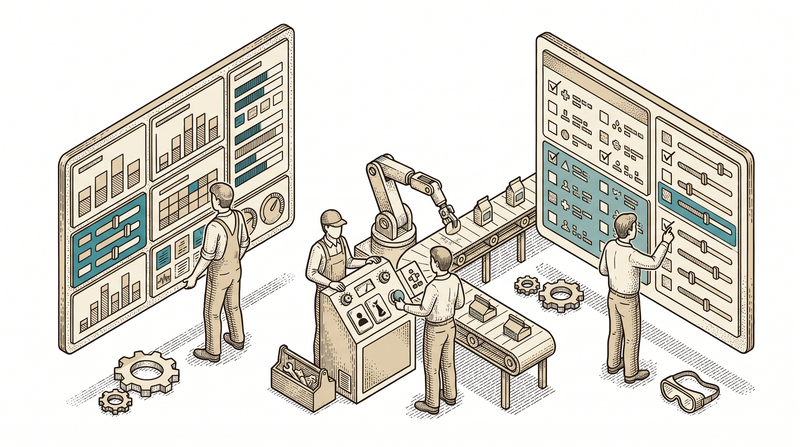
Production software that carries the shop-floor truth to the screen
In manufacturing the most expensive thing is uncertainty: not knowing where a job really is, learning the scrap count only at day's end, noticing a machine stopped only when a shipment slips. That gap between the shop-floor reality and the office record is where money quietly disappears. Vosetu closes that gap — from work orders to shop-floor data capture, from quality records to maintenance, it takes production's pulse in the moment it happens.
In this vertical our weight is not on paper but on the floor: we've written software that talks to hardware for years. We've connected devices like barcode and label printers, industrial scales and RFID/barcode readers to applications; we've built Windows station software that runs offline and syncs later for environments with no or intermittent internet; and in our printing-industry product we ran a work-order and cost engine in real production. We build your production solution on top of that experience.
- Work order → floor → record, one flow
- Printer/scale/reader integration
- Offline-capable station
- Scrap and downtime visible instantly
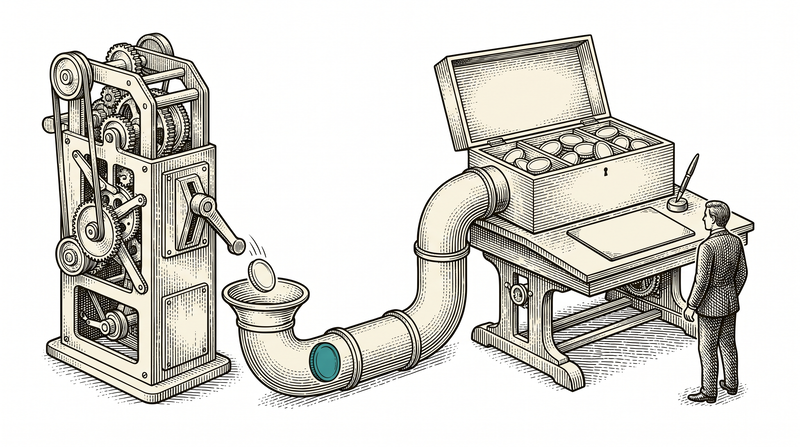
From line to shipment, the modules of production
Modules turn on independently yet share a common work-order, product and station model — an order's trail runs unbroken from raw material to the dispatch note.
Work order & production plan
An order becomes a work order, the work order drops to lines and stations; planned and actual sit side by side.
Shop-floor data capture
The operator reports output, downtime and scrap from the station; cross-verified with data from the machine.
Quality control & scrap
Measurement, checklist and defect logging; scrap causes are categorized and recurring issues become visible.
Real-time production board
Which job is where, how loaded each line is, where actual output stands against plan — at a glance.
Maintenance (CMMS)
Planned-maintenance calendar and fault logging; downtime and maintenance history are tracked per machine.
Stock & raw material
Raw-material, work-in-progress and finished-goods movement is tied to work orders; consumption is deducted from real output.
Cost engine
Material, labor and machine time are loaded onto the work order; actual cost is compared with the estimate.
Label & barcode
Product, box and pallet labels print from the printer; every movement stays traceable via the reader.
Efficiency & OEE report
Availability, performance and quality combine in one indicator; where the bottleneck is becomes clear.
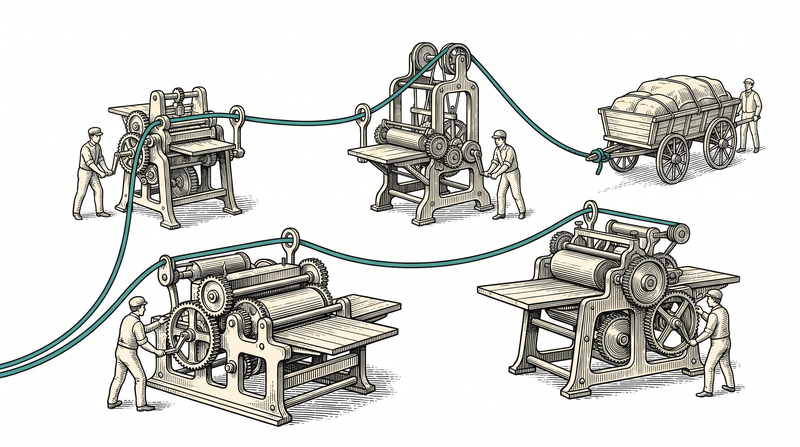
What ships as standard in every production deployment
What actually runs on the floor
Hardware bridge
Software should talk to production, not just to a screen. Barcode and label printers, industrial scales, RFID/barcode readers and machine controllers connect directly to the application. A scale reading, a barcode scan or a sensor signal is recorded without waiting for human entry — error margin and delay drop together.
- Printer, scale, RFID/barcode reader
- Data exchange with machines/PLC
- Measurement not left to manual entry
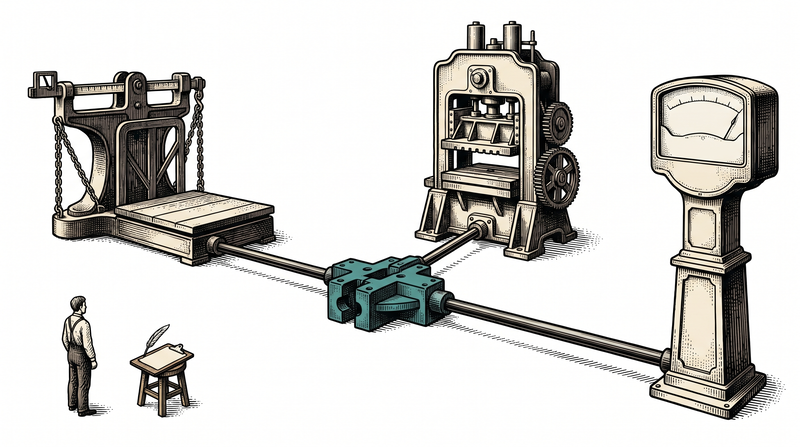
Offline station
On the shop floor internet can be a luxury; the line shouldn't stop because the connection dropped. The station software runs offline: it keeps data locally, production keeps flowing, and it syncs to the center when the connection returns. We've run this pattern in real Windows station software — an outage is not a disruption but an anticipated state.
- Buffer locally, sync later
- Production continues on a disconnected line
- Conflict-free data merge
Work-order & cost engine
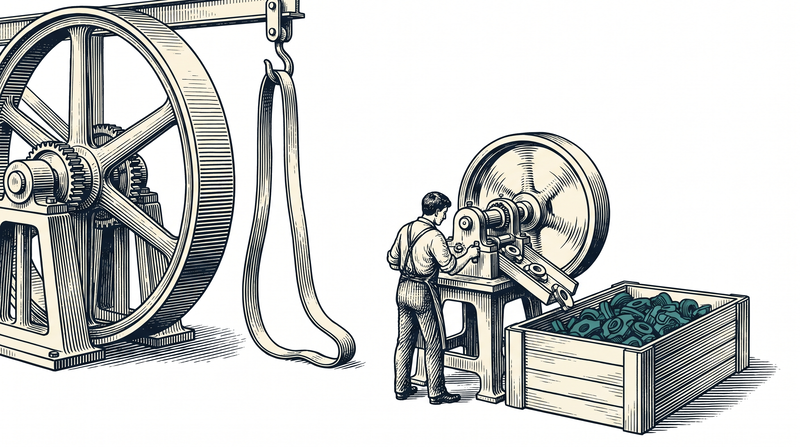
A work order is not just 'what will be made' but 'what it actually cost'. Material, labor and machine time are loaded onto the work order; the estimated cost sits beside the actual. We ran this engine in real production in our printing-industry product — the estimate is in hand when quoting, the real figure when the job is done.
- Material + labor + machine time
- Estimate vs. actual comparison
- Profitability per work order
The technology we build on
- .NET 9
- ASP.NET Web API
- PostgreSQL
- Windows
- offline cache
- printer/scale/reader
- TCP/IP
- Modbus
- OPC-UA
- MQTT
- edge gateway
- Angular
- Next.js
- Flutter
How we bring your production live
Line & process discovery
We map your production flow station by station: where each datum arises, which device connects, which measurement is manual and which automatic.
Hardware connection & station
We connect printers, scales and readers, set up the offline station software and test it on the floor with real data.
Work-order, quality & cost setup
We set up the work-order flow, quality checklists and the cost engine; and define efficiency and OEE indicators.
Training, go-live & care
We train operators and managers and stand by during the first shifts; then we continue support under an SLA maintenance plan.
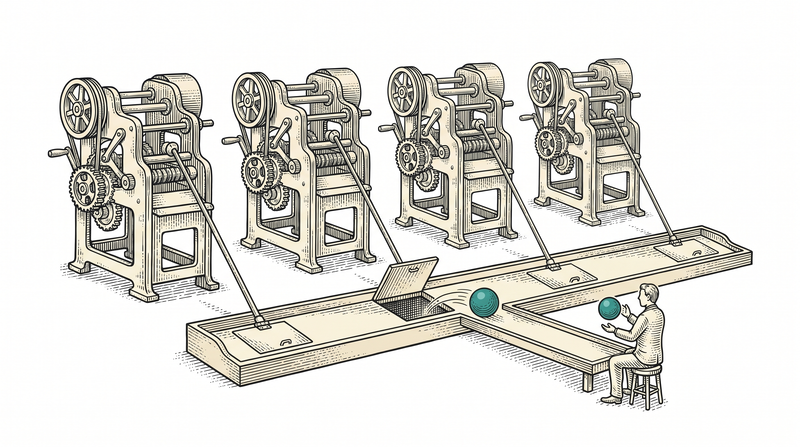
In manufacturing, software's job is to reduce guesswork. If where a work order stands, when a machine stopped and what a part cost aren't measured, they aren't being managed either — the truth must be visible in the moment, not at day's end.
Frequently asked
Can you read data from our machines and devices?
Usually yes. We work with machines, PLCs and sensors that expose data over industrial protocols (Modbus, OPC-UA, TCP/IP) and MQTT; connecting devices like barcode/label printers, industrial scales and RFID/barcode readers to an application is routine for us. In the pre-deployment survey we clarify how each device will connect.
Our factory has no/intermittent internet — will it still work?
Yes. The station software is designed to run offline: it keeps data locally, production keeps flowing, and it syncs to the center when the connection returns. We've run this offline Windows-station pattern in real production; an outage is an anticipated state, not a failure.
What do you bring ready on the production side?
Three things that have run on the floor: hardware integration (printers, scales, readers, PLCs), Windows station software that works offline and syncs when the connection returns, and a work-order/cost engine running in real production. We build your production solution on that backbone, shaped to your factory's flow.
Does it connect to our existing ERP?
Yes. The system can talk to the ERP at the level of work orders, stock movements and cost data; the ERP provides the plan, the floor feeds actuals back. The integration is added as an independent adapter without touching the core, so even if the ERP side changes the production backbone is unaffected.
Can we really see scrap and downtime causes?
Yes. Scrap and downtime are logged with categories the operator selects; recurring causes surface in the report. So instead of 'we have a lot of scrap in general' you reach the clarity of 'this station has scrap for this reason' — corrective work focuses on a concrete point.
Let's move your production from guesswork to measurement
We'll listen to your line and devices and map out where to start, together. The first conversation is non-binding.