Hardware Integration & IoT
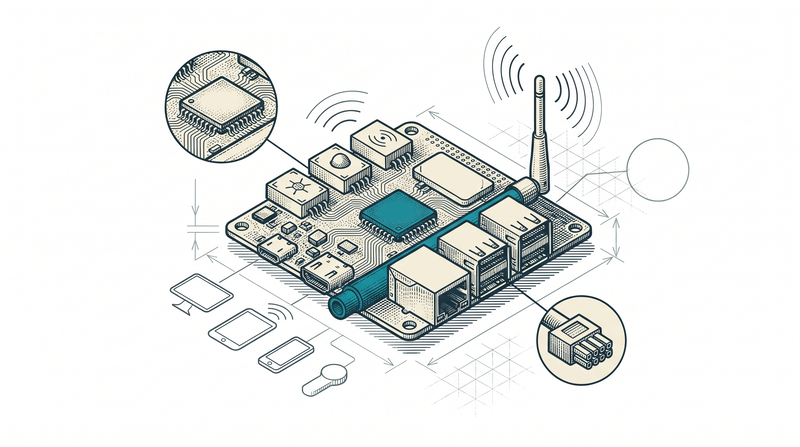
Closing the gap between the physical world and software
A sensor reads a value, a meter turns a number, a machine emits a signal — but none of that data means anything until it's connected to software. Hardware integration starts exactly there: turning the language a device speaks (serial, TCP/IP, Modbus, OPC-UA, MQTT) into a record software understands. This usually isn't on a software agency's service list; we highlight it as a separate service because it's already running inside our sector products.
The hardware bridge runs live in three separate products of ours: a bridge reading data from machines and PLCs on the manufacturing side, a line gathering meters and sensors through an edge gateway in facility management, and a layer driving storefront signage screens on the food-service side. The service on this page is the common thread of those three: connecting a device to software.
- Modbus, OPC-UA, TCP/IP, MQTT support
- A bridge running live in our sector products
- Offline buffer-and-sync via an edge gateway
- A vosetu difference most agencies don't offer
The sub-services living under hardware integration
The device type changes, but the pattern stays the same: read, verify, record, alert when needed.
Device & sensor data collection
We build a bridge (IoT gateway) that reads data from meters, sensors and control units.
Signage & network device management
We build the layer that manages storefront signage screens and network devices from the center.
Communication over serial, TCP/IP and MQTT
We translate the protocol a device speaks (including Modbus, OPC-UA) into a data model software understands.
Remote monitoring & command dispatch
We monitor a device's state remotely and send it commands when needed.
Streaming to the cloud & visualization
We carry device data to the cloud and turn it into a readable real-time dashboard.
Threshold alerts & alarms
A value over threshold or an abnormal signal instantly raises a notification — by SMS, email and on the dashboard.
This bridge is already running in our sector products
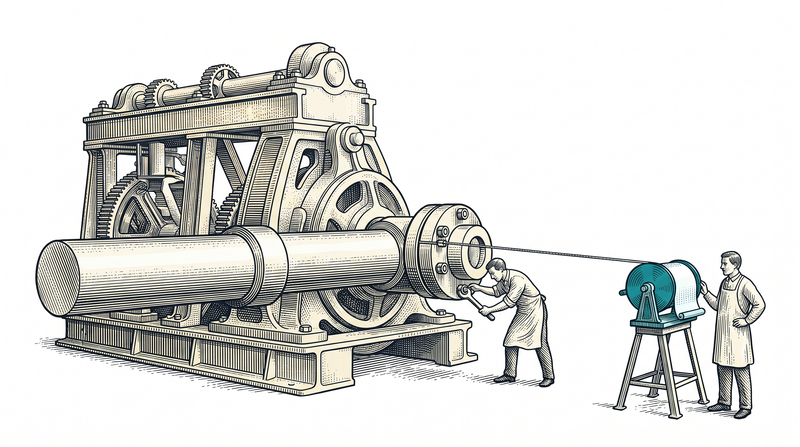
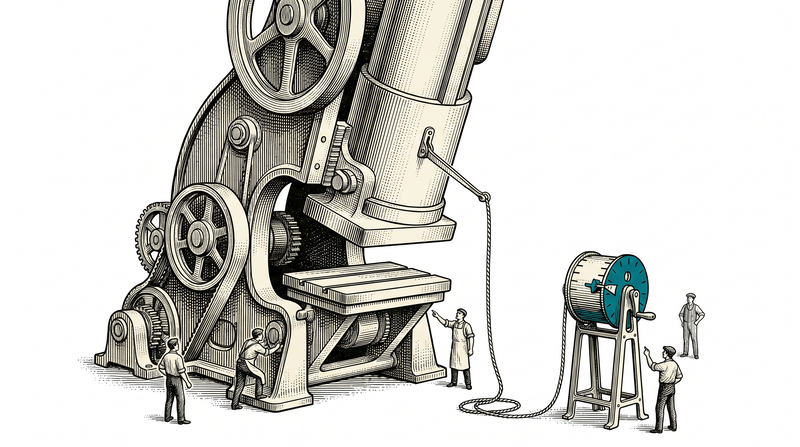
Manufacturing: machine, PLC and hardware bridge
In our manufacturing product, barcode/label printers, industrial scales, RFID/barcode readers and machine controllers connect directly to the application. A scale reading or a sensor signal is recorded without waiting for human entry — this is exactly the service on this page, at work on the shop floor.
- Printer, scale, RFID/barcode reader
- Data exchange with machines/PLC
- Measurement not left to manual entry
Energy & facility: meters, sensors and the edge gateway
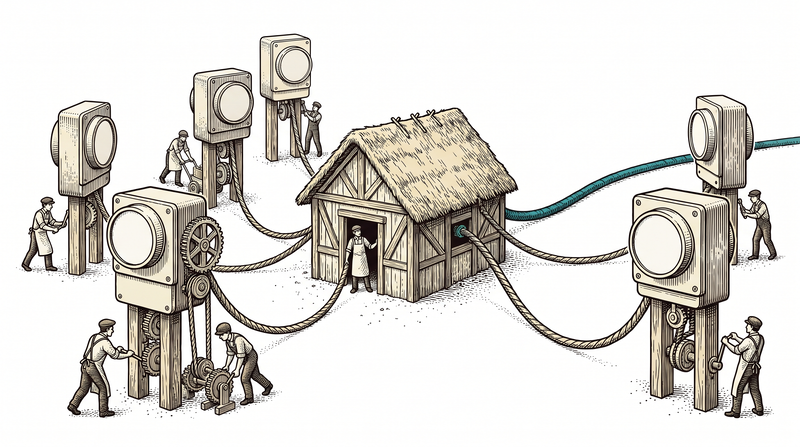
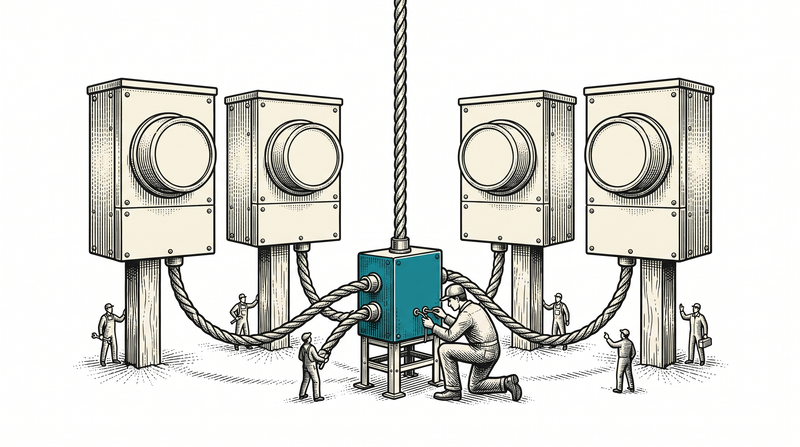
In our facility-management product the system talks to meters, sensors and control units over industrial protocols; an edge gateway collects the data and carries it to the center, buffering locally when the connection drops. The same bridge architecture adapts to your own devices.
- TCP/IP, Modbus, OPC-UA
- MQTT & edge gateway
- Offline buffer-and-sync
The storefront signage screen
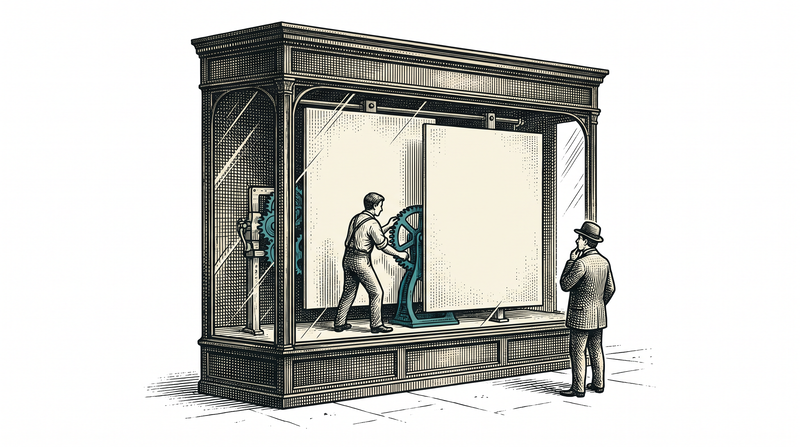
Alongside the till and kitchen display, our food-service product also manages storefront signage TVs: menu and promotion content changes from the center and reflects on the screens instantly. A small but real example of hardware integration — the screen itself is a 'device'.
- Signage content managed from the center
- Instant reflection, no manual update
- A screen is a hardware-integration endpoint too
Sectors where the hardware bridge is at work
The same protocol and data-collection logic runs, adapted, across different devices in different sectors.
Manufacturing
Printer, scale, reader and machine/PLC integration, together with offline-capable station software.
Energy & Facility Management
Meter and sensor reading, edge gateway, threshold alarms and an energy-consumption dashboard.
Food service
Kitchen display (KDS), signage TV management and connectivity with payment/meal-card devices.
Logistics
Shipment traceability via barcode/QR and GPS-based fleet/vehicle location tracking.
How we build a hardware integration
Device & protocol discovery
We determine on site which device speaks which protocol (Modbus, OPC-UA, TCP/IP, MQTT).
Bridge & edge-gateway setup
We set up the bridge that collects data and carries it to the center, and enable local buffering for disconnected periods.
Dashboard & alert rules
We define the real-time dashboard and threshold/alarm rules, and validate them with real data.
Go-live & care
The device is tested end to end in the live environment; monitoring then continues under SLA maintenance.
What ships as standard in every hardware integration
The technology we build on
- MQTT
- TCP/IP
- Modbus
- OPC-UA
- .NET
- Raspberry Pi
- edge gateway
- Time-series
- PostgreSQL
- Real-time dashboard
- Threshold alarm
Frequently asked
What do you bring ready on the IoT side?
A hardware bridge running live in three products: the integration we built with printers, scales, readers, meters and sensors on the manufacturing, facility-management and food-service sides. The integration specific to your devices is built on that bridge.
Which devices and protocols can you work with?
We work with machines and PLCs that expose data over Modbus, OPC-UA and TCP/IP, sensors and edge devices that speak MQTT, and serial/USB-connected printers, scales and readers. A new device type is added as an adapter without touching the core.
Is data lost if the internet drops?
No. The edge gateway buffers readings locally when the connection drops and syncs them to the center once it returns. We run this pattern in real operations in our facility-management and manufacturing products.
Is it brand-independent?
Usually yes. An edge gateway aggregates different-brand devices at one point; in the pre-deployment survey we determine which protocol your devices speak and, where compatible, connect them without replacement.
Do you provide monitoring and support after launch?
Yes. A real-time monitoring dashboard and threshold alarms are standard; post-launch SLA maintenance covers bug fixing and new-device integration requests.
Let's get your devices talking to software
We'll listen to which device you need connected and over which protocol, and map out where to start, together. The first conversation is non-binding.